


Rising costs at the supermarket, the gas pump, and the doctor’s office are forcing many Americans to rethink their spending. This economic reality is delaying or jeopardizing important plans, especially big-ticket purchases and projects.
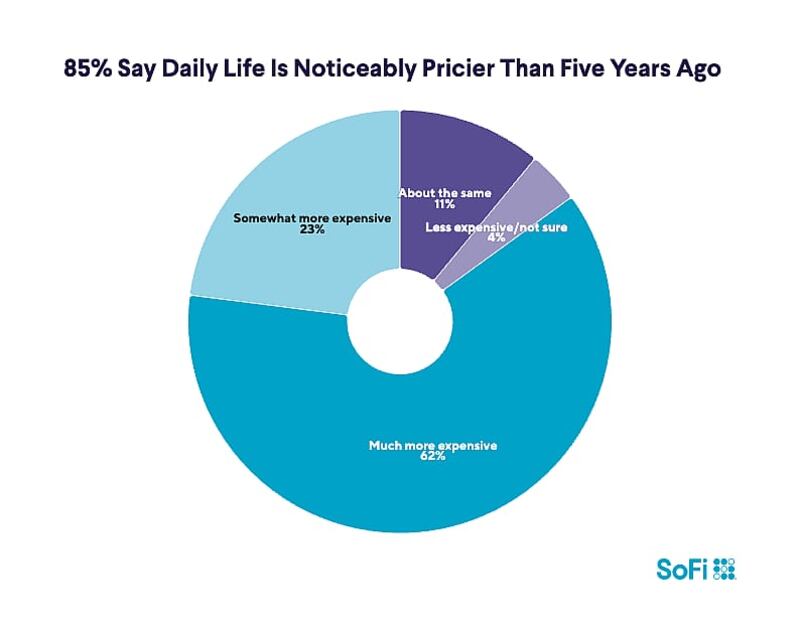
Indeed, in the latest SoFi survey, 85% of respondents assert their daily lives are more expensive now than five years ago. To cope with the situation, many delayed buying a car (18%) or taking vacations (17%). And when they do decide to spend on something sizable, some are truly sacrificing. For example, 13% have used emergency savings, 12% have given up free time to take on additional work, and 6% have cut back on retirement account contributions.
Read on for more details of what life events Americans will wait on, which ones they’re willing to pay for even in lean times, and where they’re finding the funds when necessary.
Methodology
Findings are based on an online survey of 523 U.S. adults aged 18 to 80. The survey was conducted in June 2026. Some questions incorporated multiple responses. Percentages may not total 100 due to rounding.
Key Findings
- 96% of survey respondents find their daily life just as expensive — or more so — as it was five years ago.
- 38% of participants say their biggest recent expense had to do with housing; for 23%, that was moving, while 15% pointed to home improvement or renovation.
- More than three-quarters (77%) delayed specific life events due to financial considerations.
- 41% of postponers delayed buying a car; 40% decided to wait before taking a vacation.
- 63% of postponers put off housing-related expenditures.
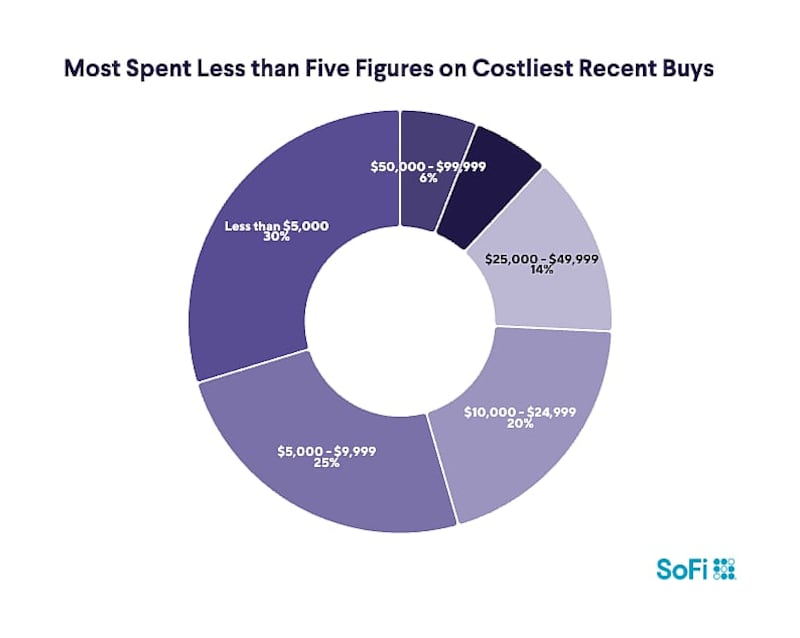
- For 90% of respondents, their priciest recent expense cost less than $50,000, and 30% estimated having spent less than $5,000.
- Overall, more participants financed their big purchases with nonretirement savings (30%) than with credit cards (26%).
- Day-to-day price increases feel significant to 32% of respondents in the South, versus 15% of Northeasterners.
The Most Common Major Life Events
In reporting on their financial lives, survey respondents identified the biggest happenings of the past five years and looked ahead to the next few. Most commonly, these events involve expanding their horizons, whether via travel (noted by 54%) or moving house (47%); many also mobilized by buying a car (44%).
Respondents also took actions to invest in their future. They mention renovating their homes (41%), getting married (24%), committing to higher education (17%), and starting a business (11%).

SoFi
The Biggest Financial Burdens
Asked to name the one expense that imposed the biggest financial burden on them, almost two out of five (38%) survey respondents refer to a housing-related expense. Nearly one in four (23%) point to moving house, while another 15% cite home improvement or renovation.
Among the youngest respondents, moving had the biggest financial impact (36%), significantly outpacing home improvement (11%), higher education, and medical expenses (both 10%).
By contrast, among the oldest cohort, moving is named by only 12%. Instead, more than one-third (34%) report their top expenses were new cars, followed by home renovations (18%) and travel (16%). Major medical expenses were paramount for 15%.

SoFi
Financial Delays Are Common
Overall, the majority of survey participants (54%) say they “probably” or “definitely” delayed major life events due to cost. Just 29% assert they chose not to wait.
Among respondents up to the age of 61, fully three out of five (62%) report putting a big purchase or plan on hold; about one in five (21%) say they’ve rejected delays.
Only among seniors (aged 62 to 80) does the balance tip the other way. More than half of them (52%) say they forged ahead with something significant despite the expense. Fewer than one-third (33%) held off.

SoFi
Which Life Events Get Delayed?
About three-quarters (77%) of respondents state that financial considerations caused them to delay specific life events.

SoFi
Unsurprisingly, the expenses they put on hold tended to be luxuries. About two-fifths of postponers (41%) put off buying a car, while 40% decided to delay a vacation.
For about two-thirds (63%) of postponers, housing upgrades had to wait. Renovations were rain-checked by 33%, while 30% decided to stay put rather than moving to a new home.
Some life events are harder to defer. Only 16% of respondents delayed major medical expenses, and just 14% hesitated on higher education or weddings.
Meanwhile, 118 respondents (23%) seized the day, saying that financial concerns have not caused them to delay anything. This was true for 18% of households earning less than $50,000 and 28% of those earning $100,000 or more.
How Much Do Major Life Events Cost?
Nobody wants to put life on hold indefinitely, however, so survey respondents prioritized their purchases and spent money accordingly.
SoFi
Asked to recall their single priciest recent expense and how much they spent, most (55%) estimate a cost of four figures or less; 30% say it was less than $5,000. Of the 35% who spent between $10,000 and $50,000 on their big-ticket item, about two-thirds (or 21% overall) paid less than $25,000.
Moving house is the most common big expense (23% of respondents). Most (69% of this subset) spent less than $10,000 to relocate.
Another commonly cited move is the purchase of a car, named by 19% overall. About half of this group (47%) paid between $5,000 and $25,000 for their new wheels.
About 10% say they traveled. Within this crew, more than two out of five (44%) kept costs below $5,000.
Paying for Major Life Events
To pay these substantial sums, survey respondents were most likely (30%) to tap into their nonretirement savings. Slightly fewer (26%) used credit cards to cover their expensive events.
Other forms of loans and credit were chosen by a combined 15%, including 7% who signed on to payment plans and 6% who opted for personal loans. Fourteen percent reported that they used multiple payment methods.
Certain types of expenses apparently lend themselves to credit card spending, per survey results:
- Vacation and travel: 37% of people use credit cards (possibly seeking rewards points) versus 24% who spend their savings
- Moving: 29% use cards and 22% spend savings
- Major medical expenses: 28% use cards and 17% spend savings

SoFi
Payment sources don’t vary much by spending levels, though. At almost all price points, the respondents are most likely to spend money from their savings. This includes the small subset (6%) who spend $100,000 or more. More than half of them (52%) cover the bill using their savings.
For smaller sums, credit cards are more popular. Among the 30% of respondents who spend less than $5,000, one-quarter (25%) pay by credit card (versus 19% using savings).
Financial Sacrifices Americans Make
To fund major life events, most respondents cut back on other spending, reduced savings, or increased debt. Only 17% made no financial changes.
Those survey participants who did rearrange their finances to pay for their high-cost venture took a variety of approaches.

SoFi
Many economized. More than one-third of all respondents (37%) say they cut back on discretionary spending, while 25% delayed other life events and 11% reduced retirement contributions.
An industrious 25% took on additional work.
Meanwhile, almost two-thirds (62%) used debt. This group delayed paying down existing loans (22%), borrowed money from family or friends (22%), or charged their expenses to one or more credit cards (18%).
What People Would Prioritize Next
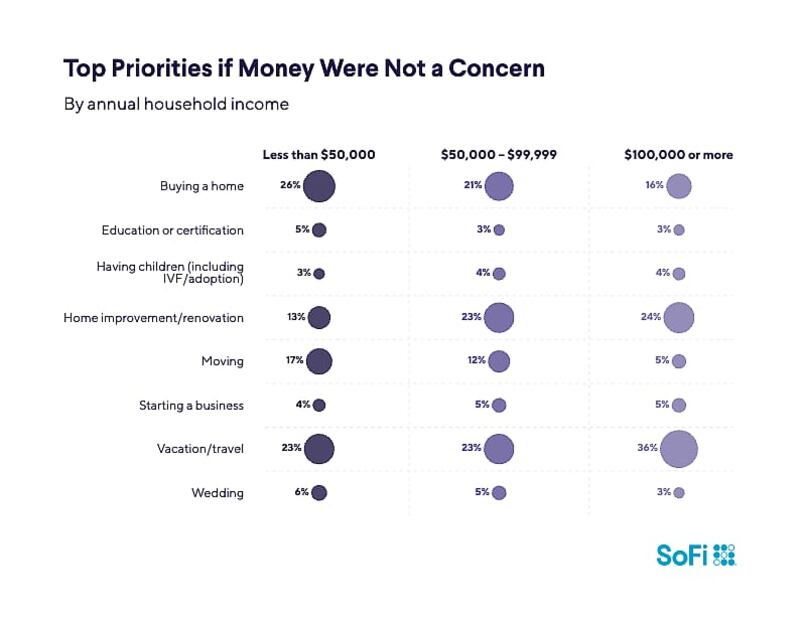
Given the opportunity and the extra cash, more than half (52%) of respondents overall say they would spend their windfall on something home-related: buying (21%), improving (19%), or relocating (12%). Among those earning less than $100,000 per year, 56% would buy, renovate or move.
For those at all income levels, more than one in four (27%) would get out of town, taking a vacation or embarking on some other sort of travel. Those with household incomes below $100,000 are less likely to make that choice (23%).
Age-related preferences differ widely. Of those under the age of 30, three in 10 (30%) would prioritize purchasing a home; the preference is almost as strong (29%) among midlifers 30 to 45.
By contrast, those aged 46 to 61 would choose travel over home improvement by a margin of five percentage points (29% versus 24%); among the oldest cohort, that margin swells to eight (40% versus 32%).
Respondents in more affluent households — those earning $100,000 or more — also choose travel by a wide margin. More than one-third (37%) of them say they’d go away on a holiday.
SoFi
Most Americans Believe Life Is Getting More Expensive
Given the experiences described in this survey, it’s no surprise that almost all respondents (96%) find daily life at least as costly as it was five years ago. Most (85%) say it’s “somewhat” or “much” more expensive. In particular, among people between the ages of 46 and 80 — who represent half of the people in our survey — the vast majority (91%) believe so.
SoFi
Geography plays a large role in how Americans are experiencing the change. In the South, about one-third (32%) of respondents consider the price increases significant. By contrast, among Northeasterners, that percentage is just 15%.
The Takeaway
Rising living costs are challenging Americans’ financial goals, forcing delays in major milestones like housing changes, travel, and vehicle purchases. Spending priorities vary by age and household income, with older and more affluent respondents more inclined to continue spending despite economic conditions.
This story was produced by SoFi and reviewed and distributed by Stacker.